
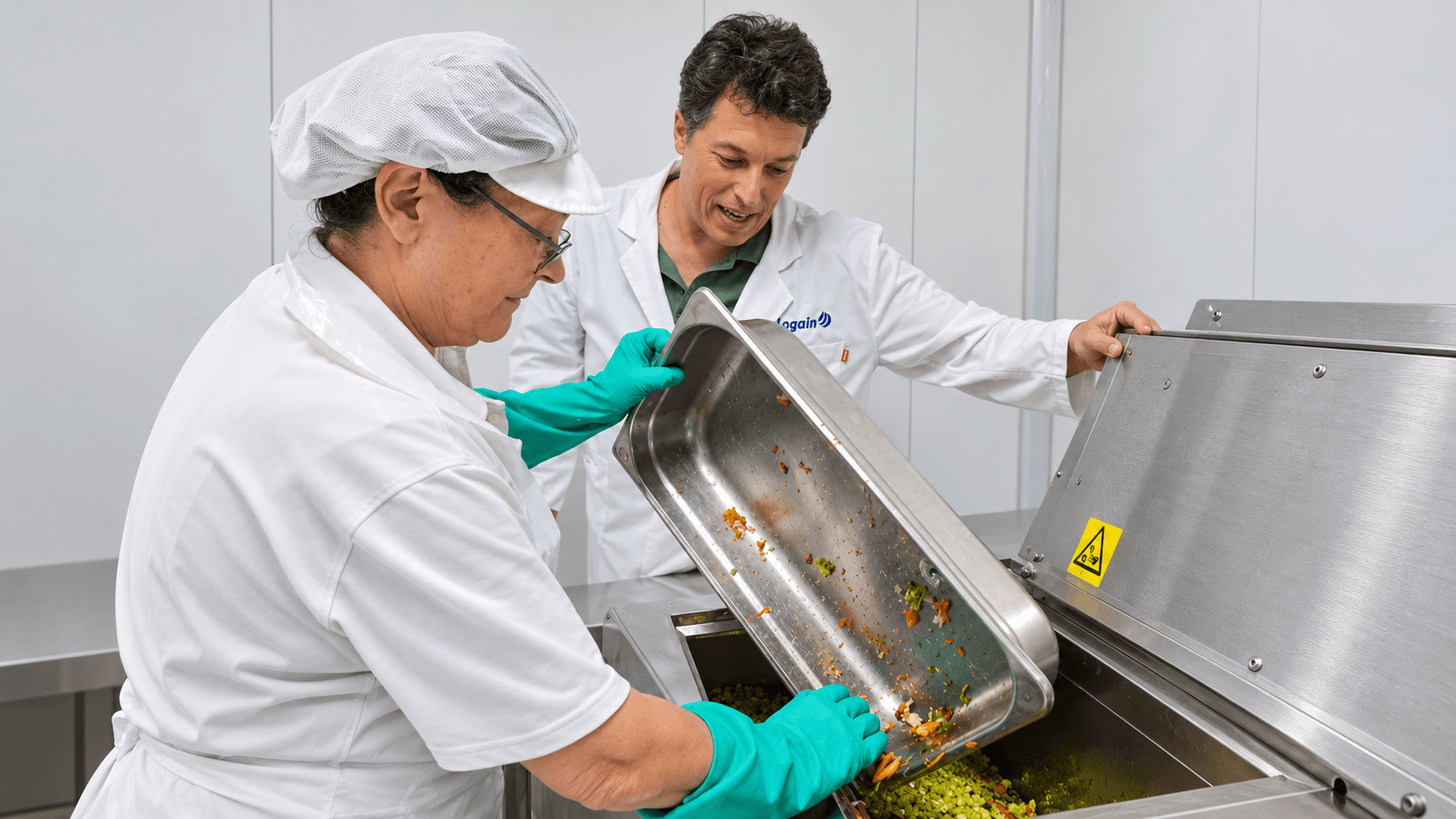
An aerobic biodigester treats food waste through the action of microorganisms in the presence of oxygen. In LFC systems, water and controlled mixing support this process, allowing food waste to be treated directly where it is generated.
Understanding what happens inside the system and which materials it accepts is the first step towards using it correctly. Below, we explain how LFC biodigesters work and the types of food waste they can process.
What is an aerobic biodigester?
An aerobic biodigester is a system that accelerates the biological breakdown of organic matter under controlled conditions. The word “aerobic” means that the process requires oxygen.
In LFC biodigesters, microorganisms break down food waste through a continuous process. Oxygen, water and mixing help maintain the conditions needed for this biological activity.
How does an LFC biodigester work, step by step?
1. Separating and loading food waste
Before adding food waste, packaging, cutlery and any incompatible materials must be removed. Waste is loaded throughout the working day, following the system’s capacity limits and loading instructions.
Continuous operation allows new loads to be added while the food already inside the system is being digested.
2. Breaking down food waste with microorganisms
Inside the system, microorganisms and enzymes help break down the food. Water, oxygen and controlled mixing support the process.
Mixing arms slowly stir the contents to bring the waste into contact with the microorganisms. The transformation takes place through biological digestion, rather than simply grinding up the food.
3. Producing a liquid effluent
The treatment produces a liquid output, known as effluent, along with carbon dioxide and heat from the biological activity.
This effluent may be discharged into the sewerage system provided it meets the applicable discharge requirements. Its management must comply with the conditions at the site and local regulations.
What types of waste can a biodigester process?
LFC biodigesters are designed to treat a wide range of food waste:
- Fruit and vegetables: preparation scraps and suitable parts of these foods.
- Meat and fish: food waste from preparation or consumption.
- Rice, pasta, bread and cereals: both preparation waste and cooked food.
- Plate leftovers and prepared meals: always separated from packaging and other materials.
- Dairy products: such as cheese and other foods compatible with the system’s operating instructions.
The composition of the waste affects how quickly it is treated. More fibrous foods may take longer to break down than other food scraps. A food being suitable for the system does not mean that it will break down at the same rate as every other food.
The categories above are a general guide: the operating instructions and the system’s limitations must be followed for each type of waste.
What materials should not be added?
Plastics, metals, glass, packaging and other inorganic materials must be separated before loading the biodigester.
A material labelled biodegradable or compostable should not automatically be considered suitable for the system. Before adding anything other than typical food waste, check the operating instructions to confirm compatibility.
Proper separation in the kitchen supports day-to-day operation and prevents unsuitable materials from entering the process.
Food waste treatment with Lagain Ecosolutions
At Lagain Ecosolutions, we support the treatment of food waste directly at its source. Understanding the process and separating materials correctly helps integrate biodigestion into everyday food waste management.
Find out more about our food waste biodigesters.
Unsure whether a particular type of waste can be treated in an LFC biodigester? Contact our team and we will help you check its compatibility.