
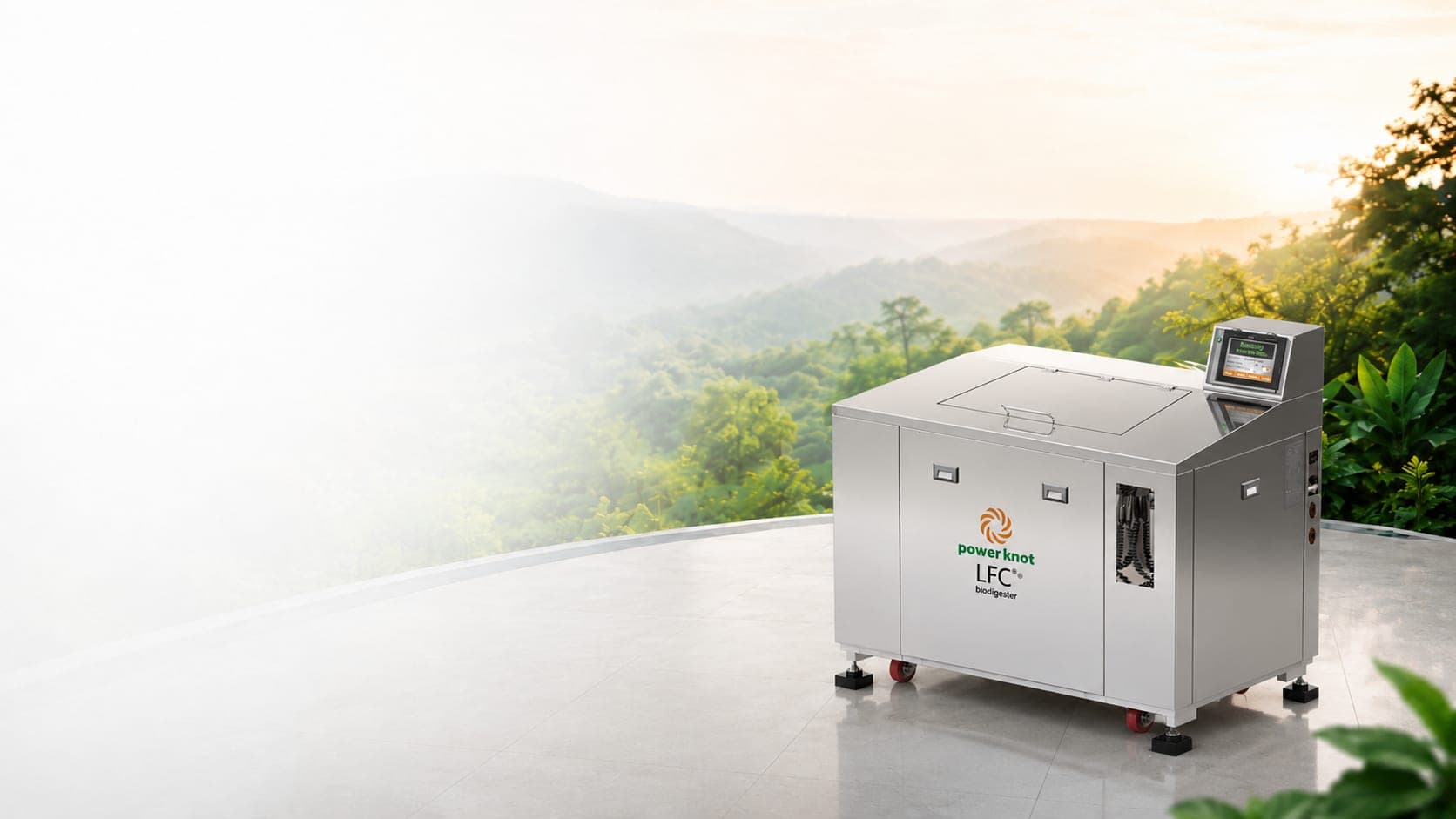

On-site aerobic digestion
Food waste digesters for on-site treatment
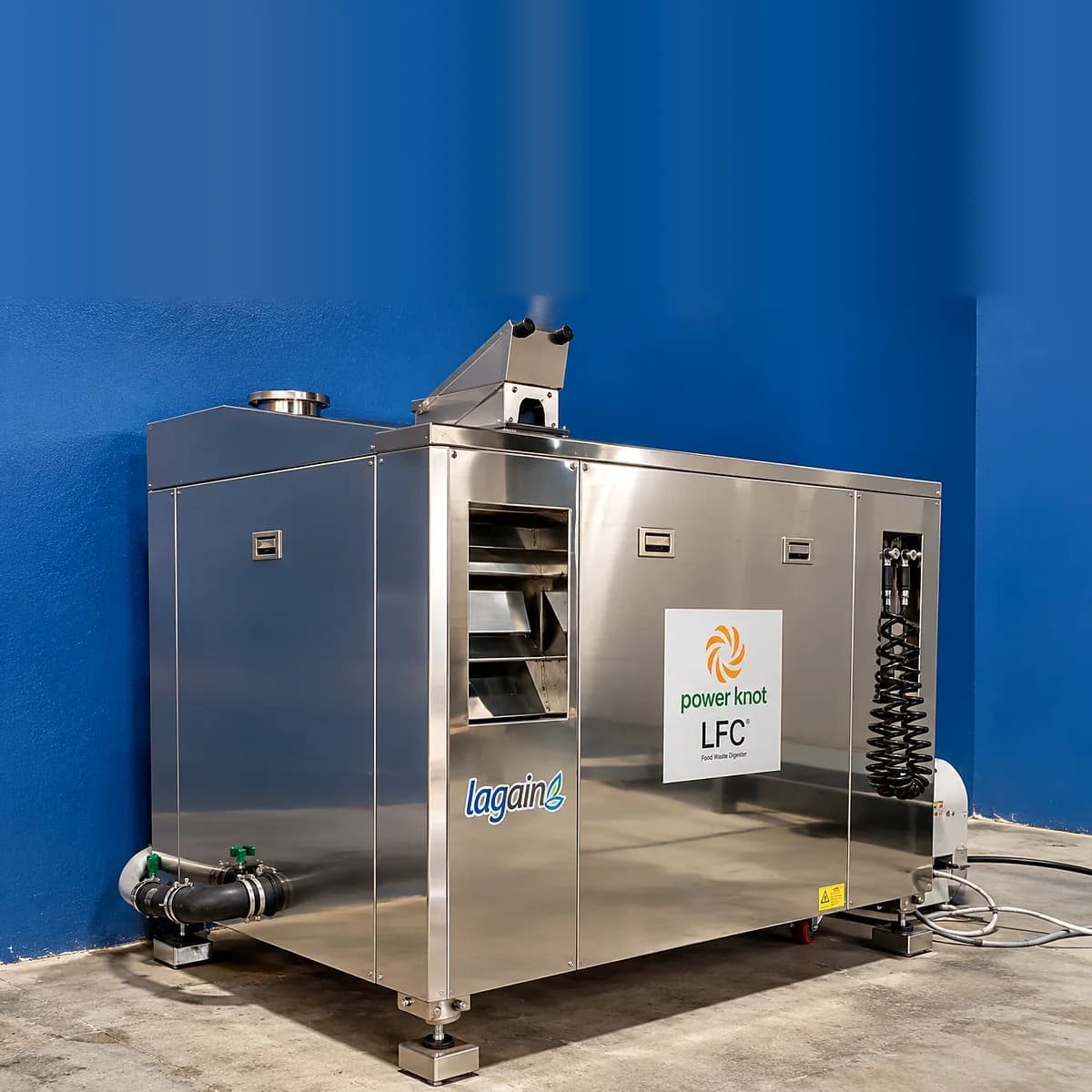
LFC aerobic food waste digesters treat food waste where it is generated, with a continuous, automated process. They reduce storage, external collections and logistics.
Prefer to message us? WhatsApp
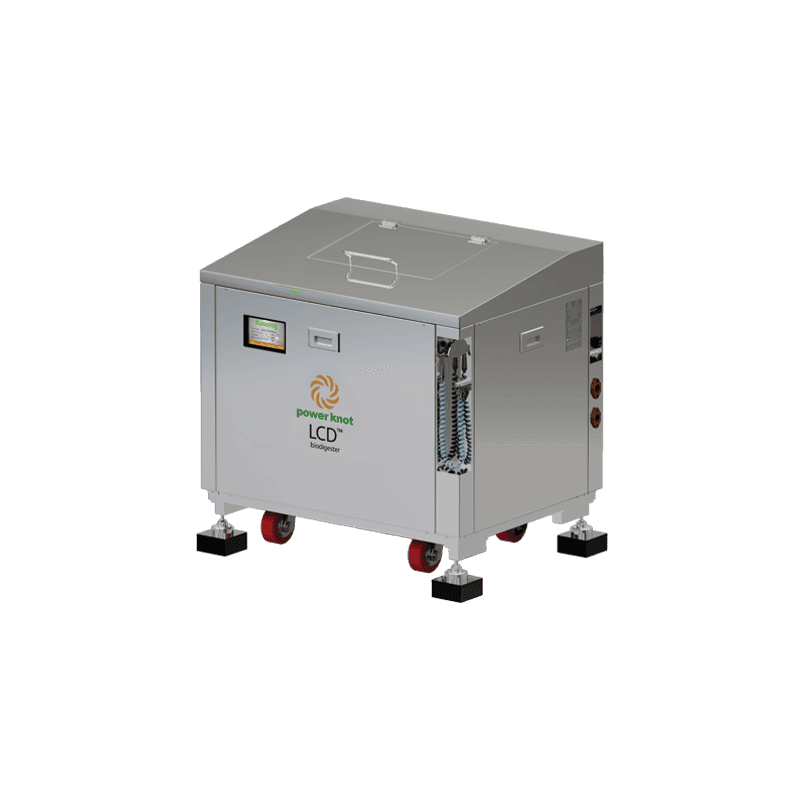
- On-site installation
- Automatic 24/7 operation
- Monitoring and traceability
Companies that trust our technology








How it works
How an aerobic food waste digester works
LFC food waste digesters use a controlled aerobic digestion process to treat food waste directly where it is generated. Microorganisms, oxygen, water and continuous mixing work together to accelerate the decomposition process automatically.
- 01
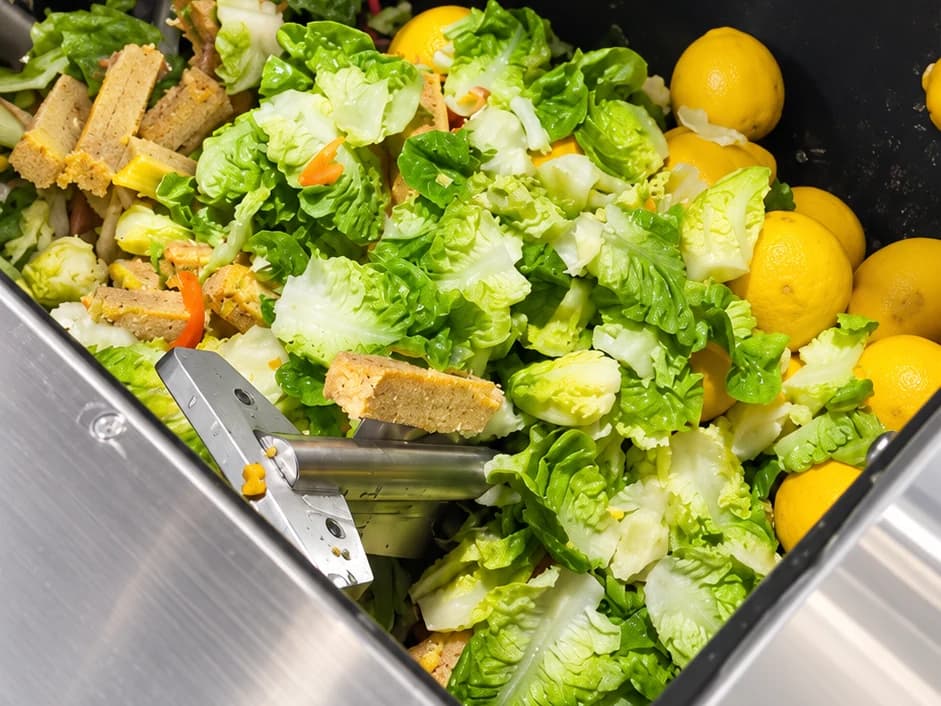
Add the food waste
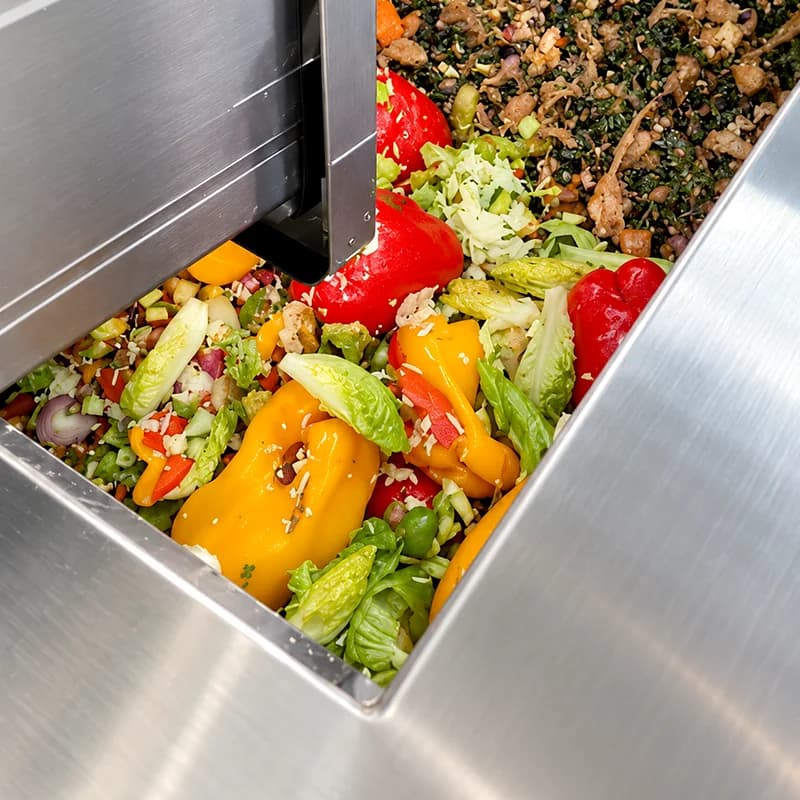
Food waste is loaded directly into the digester during daily operations, allowing continuous loading according to the capacity of the system.
- 02
Automatic aerobic digestion
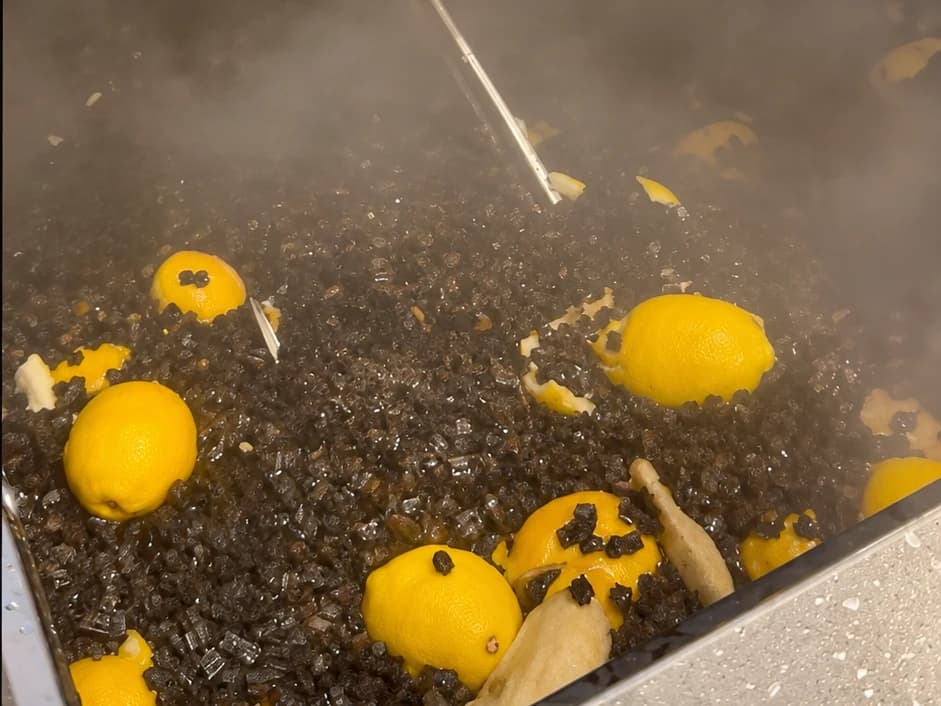
Inside the chamber, microorganisms work in the presence of oxygen, water and controlled mixing to accelerate the decomposition of organic matter.
- 03
Simplify food waste management
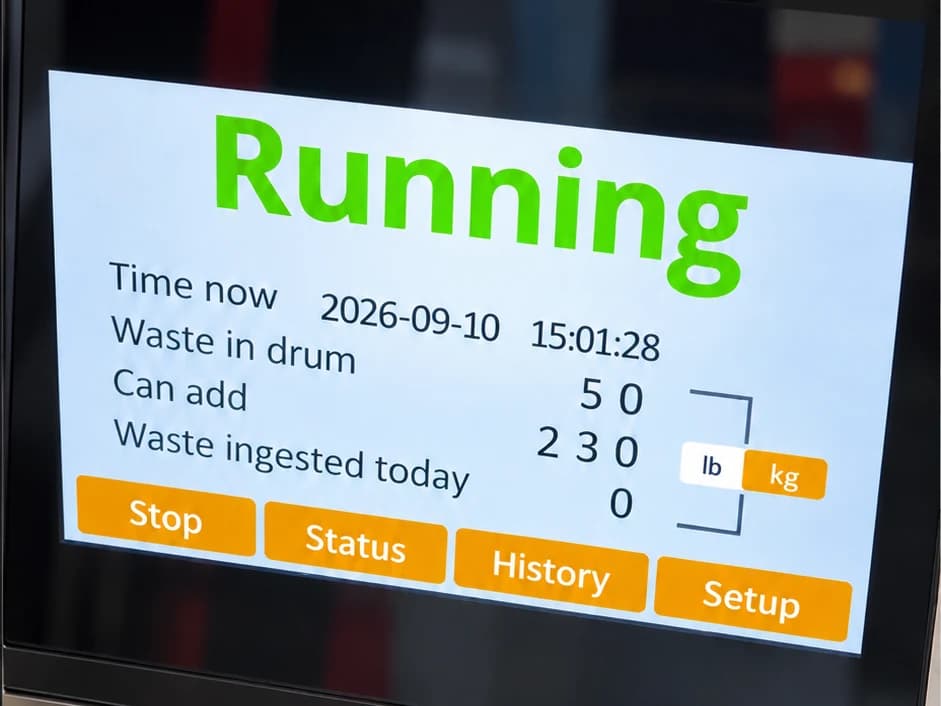
The process reduces the amount of food waste that needs to be stored and collected externally, simplifying day-to-day waste management at the facility.
Reduce the logistics behind food waste management
The LFC system treats food waste on site as it is generated, reducing accumulation and simplifying daily operations. This creates a more continuous, controlled waste management process adapted to the needs of each facility.
- Reduce collections and logistics
- By treating food waste directly on site, the amount that needs to be stored and handled through external waste collections can be reduced.
- Less stored food waste
- Reduce the accumulation of food waste over several days and the operational issues associated with storage and handling.
- Continuous operation
- Add food waste throughout the working day without waiting for batch cycles, making the system easier to integrate into daily operations.
- Monitoring and traceability
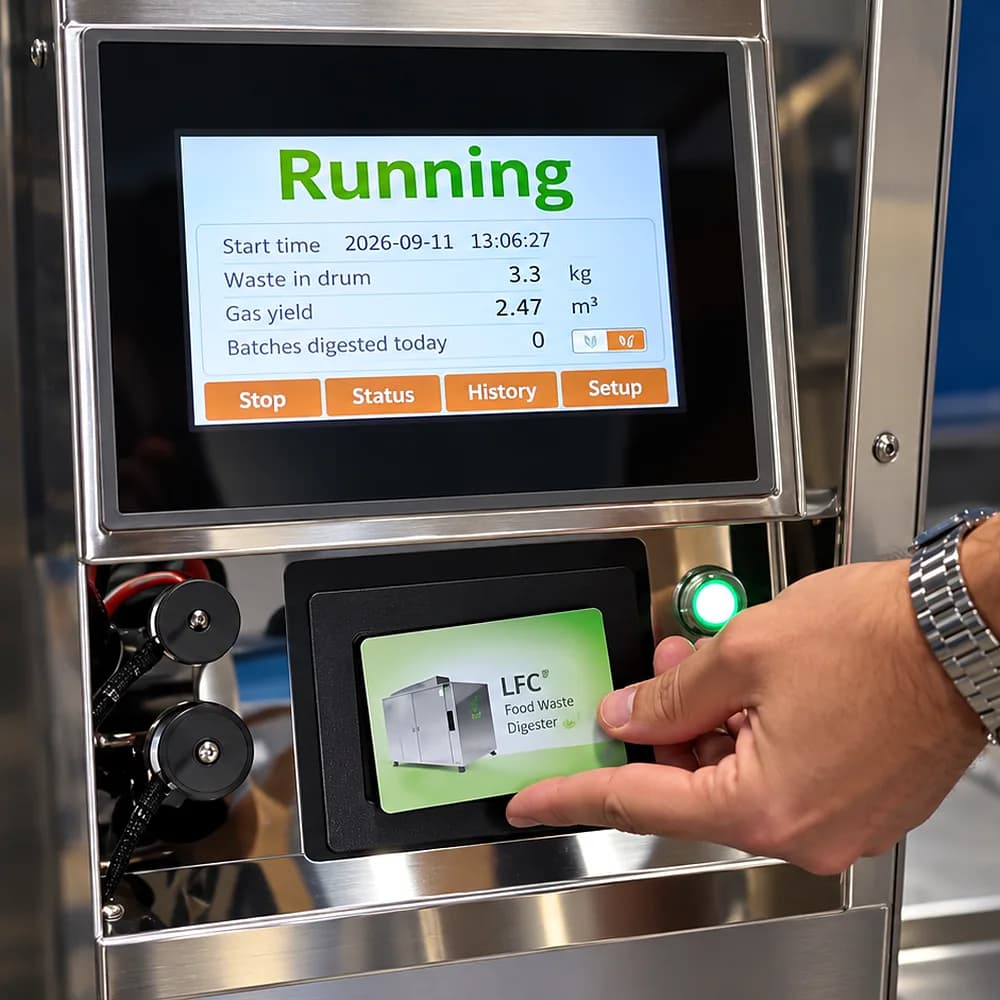
- Track loads and access data, reports, diagnostics and maintenance alerts through LFC Cloud.
Engineering · In-house technical service · International support
In-house technical service and an engineering team for your biodigesters
We take care of your equipment. We take care of your organic waste. We are with you every step of the way.
Quality technology needs a team to match. That is why we have our own engineers and technical service, specialised in industrial biodigesters.
We support you from the initial study through installation, commissioning and maintenance, with personalised attention and continuous monitoring.
- In-house technical service
- Specialised professionals for the installation, maintenance and technical support of industrial biodigesters. A direct, close service.
- Specialised engineering
- Our engineers study each project and design the solution around your waste volume, operations and installation.
- 24/7 monitoring
- Thanks to the equipment's connected technology, we monitor operation continuously and anticipate possible incidents.
- Always by your side
- Our commitment does not end with installation: we support you throughout the equipment's lifetime with advice, monitoring and maintenance.
Cargando visor 3D...
Models and capacity
Commercial food waste digesters for every capacity
From smaller professional installations to high-capacity commercial operations, the LFC range is sized according to actual daily food waste generation.
Official Power Knot LFC range
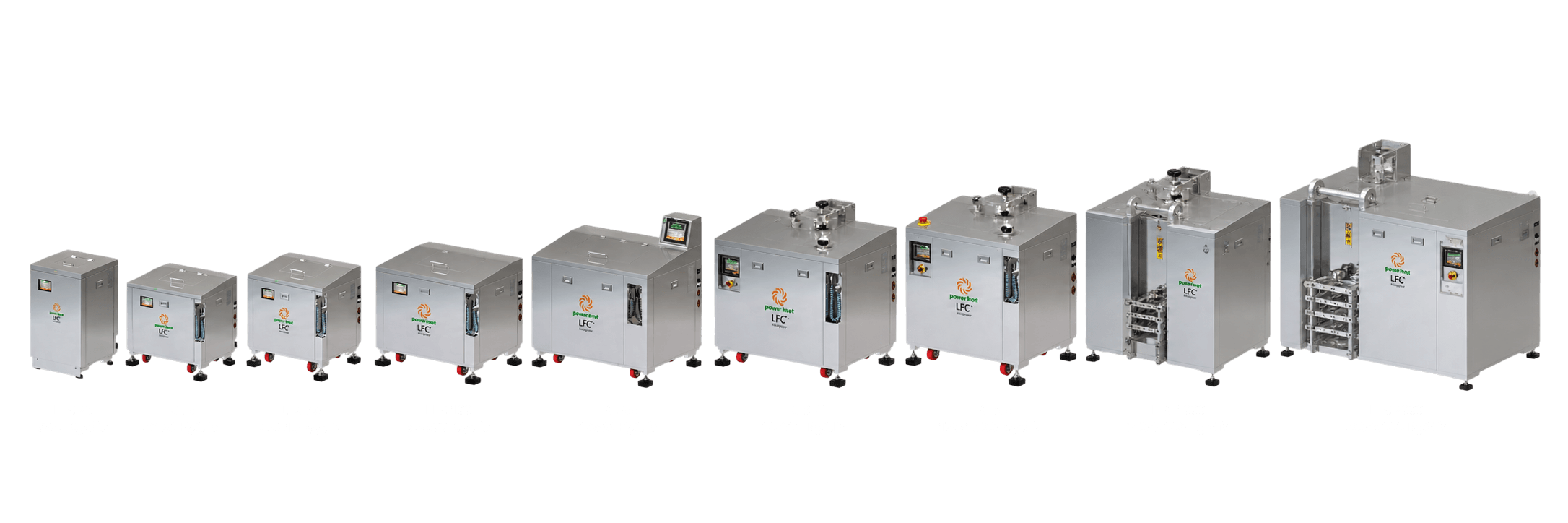
Capacity ranges may vary depending on the type of food waste, loading frequency and operating hours. The appropriate model is therefore selected using the actual waste data from each facility.
Get a model recommendation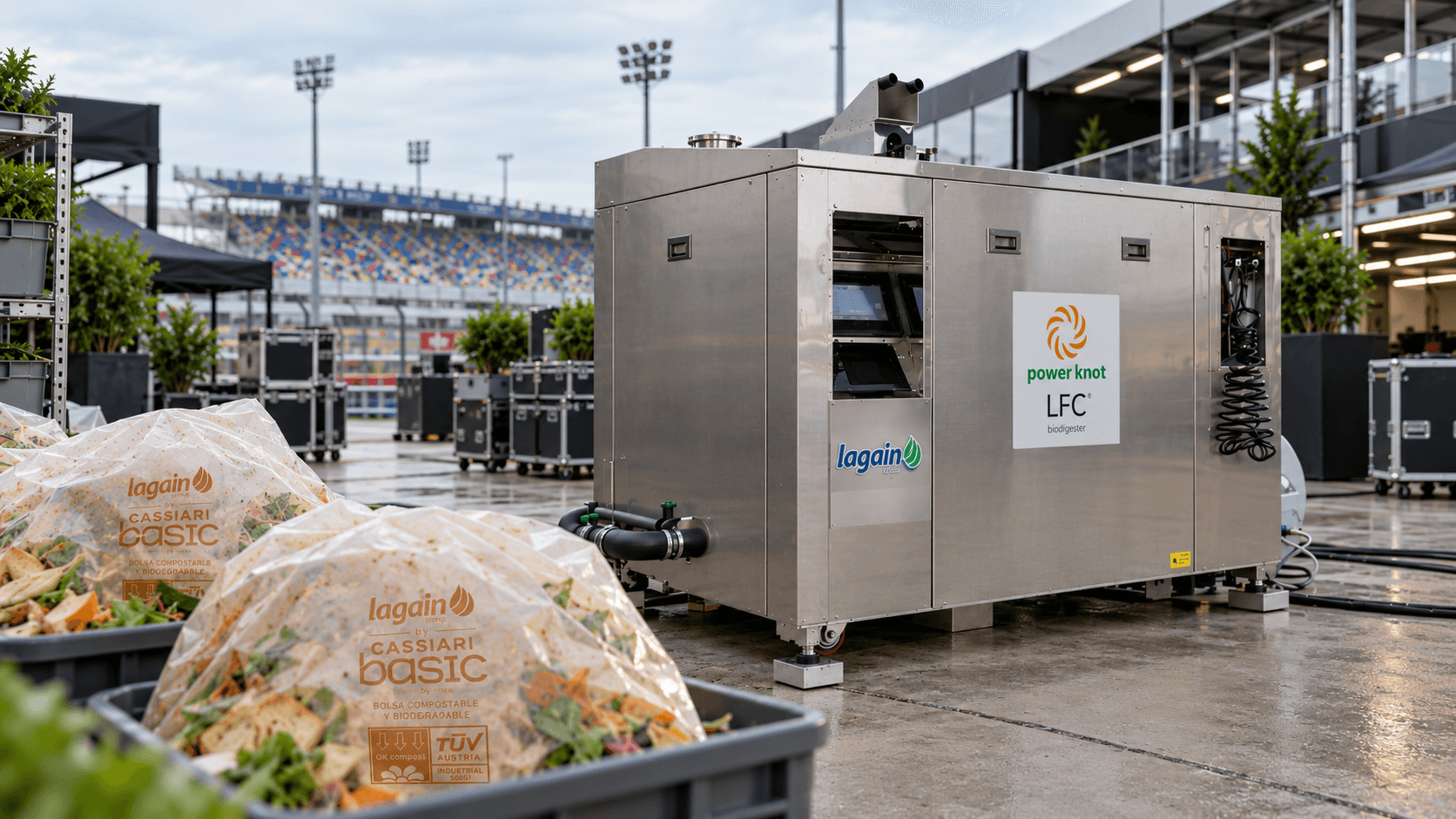
Proven at the Spanish F1 Grand Prix
At MADRING 2026, the event's organic waste was separated at source and treated on site with LFC biodigesters.
- Source separation with compostable bags
- On-site aerobic biodigestion of food waste
- Records of what was fed in and processed
Reliability and compliance
Food waste digesters built for demanding professional environments
The LFC range can be configured for different professional environments and operational requirements. Depending on the model and market, options are available relating to technical safety, weighing accuracy, public health, maritime applications and specific sector requirements.
Technical safety and compliance
Maritime applications
Weighing Accuracy

Health and Safety

Kosher Certification
The availability and scope of each certification depend on the model, market and selected configuration.
We size the food waste digester for your facility
We analyse how food waste is generated and managed at your facility to recommend the most suitable LFC model and configuration. The assessment considers capacity, installation requirements, daily operations and the future needs of the project.
You can also contact our team directly:
You can also contact our team directly:
Frequently asked questions
Your biodigester questions answered
What is an organic waste biodigester?
It is professional equipment that uses a controlled biological process to treat food scraps where they are generated. The LFC range uses aerobic digestion and produces a liquid output that must be managed in line with the site and local regulations.
How does an aerobic biodigester work?
Waste enters a chamber where Powerchips, Powerzyme, water, oxygen and slow mixing create the conditions for microorganisms to accelerate decomposition. The process operates continuously and automatically.
How is it different from an anaerobic biogas digester?
The LFC system is aerobic: it uses oxygen and focuses on on-site food waste treatment. An anaerobic digester works without oxygen and is generally designed to produce biogas and digestate.
Which food waste can it process?
It can process fruit, vegetables, meat, fish, dairy, bread and cooked food, subject to the operating instructions and limits of the selected model.
Which capacity does my business need?
Sizing depends on daily weight, peak generation, food type, loading frequency and working-day length. The official family comprises nine models with published ranges from 9 to 6,000 kg per day.
Does it produce odours or methane, or require chemicals?
The aerobic process is designed to operate without producing methane and without added chemicals. Treating scraps at source also reduces the odours associated with long storage periods.
How much does a biodigester cost?
Pricing depends on capacity, configuration, installation and the services required. An initial assessment identifies the right model and reviews the available commercial route and expected operational savings.
What does the installation require?
Each project must assess space, access, power, water, drainage, protection from the elements and local requirements. Exact requirements vary by model and Lagain reviews them before defining the solution.
Which information does LFC Cloud record?
Load cells measure the waste added and processed. With compatible connectivity and configuration, LFC Cloud provides period-based reports, diagnostics, maintenance information and aggregated data across multiple machines.
Which LFC food waste digester fits your facility?
Tell us how much food waste you generate and we will assess which model and configuration best fit your project.
Complete your setup with our compostable bags or explore our composting machines.